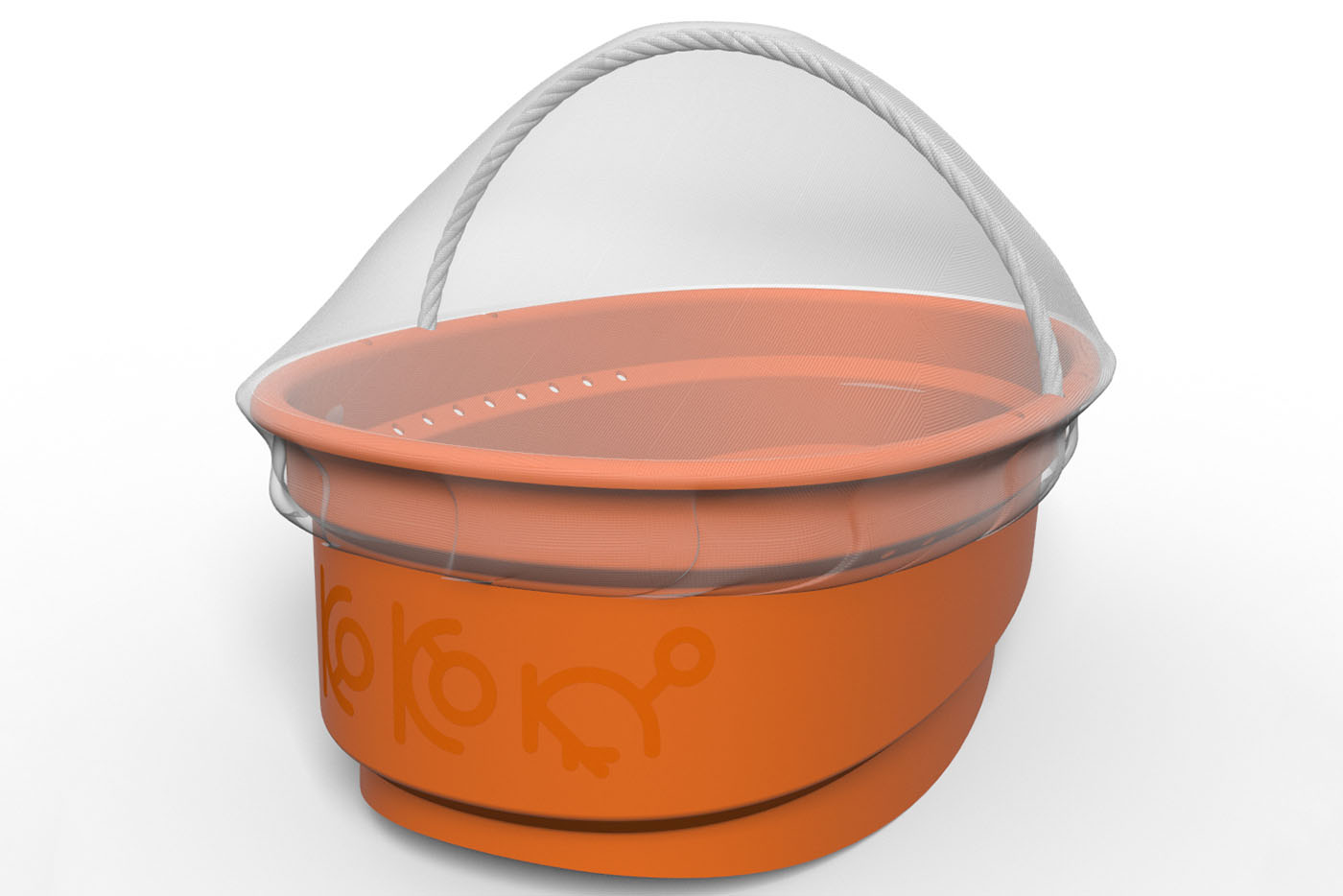
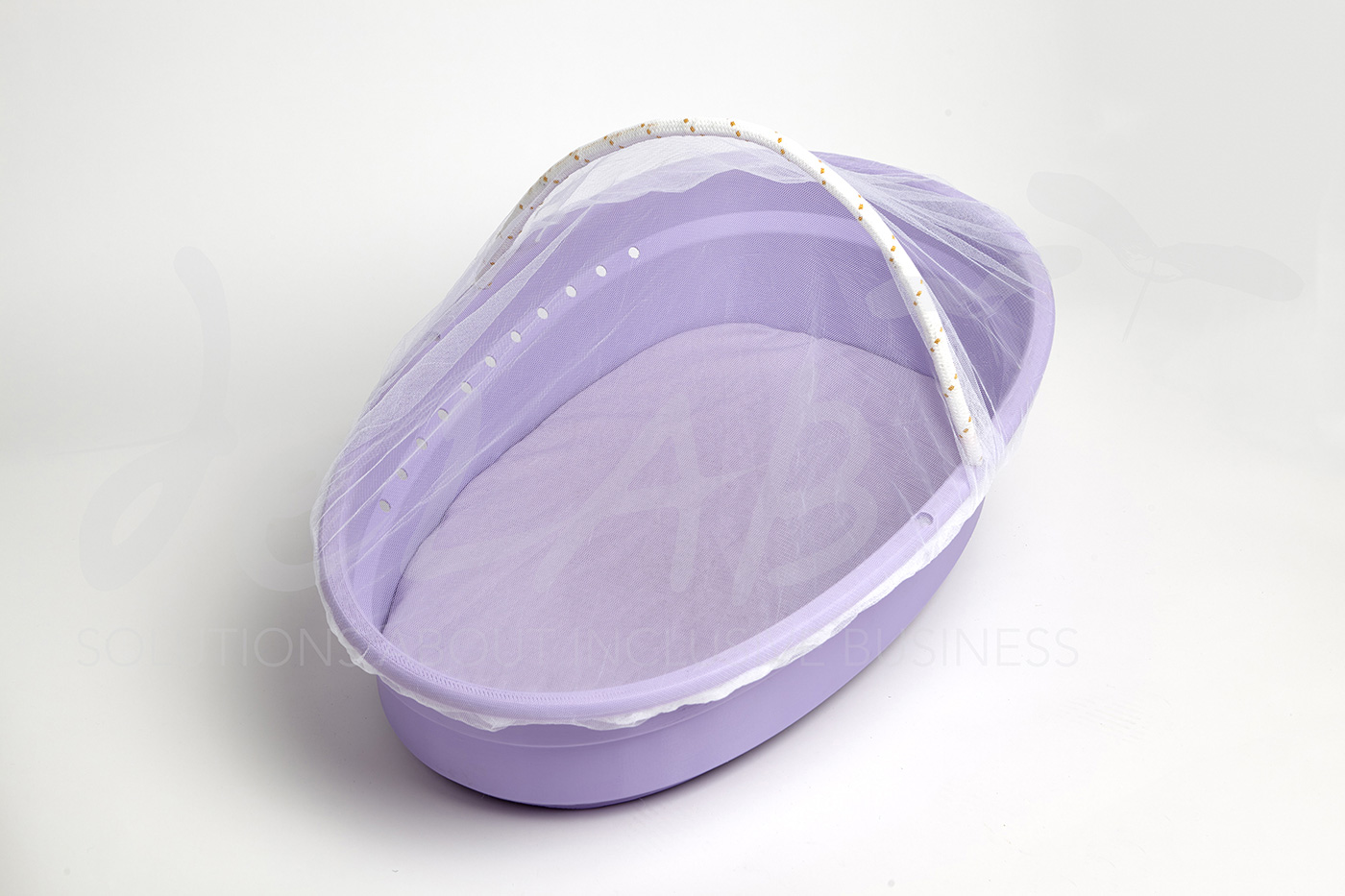
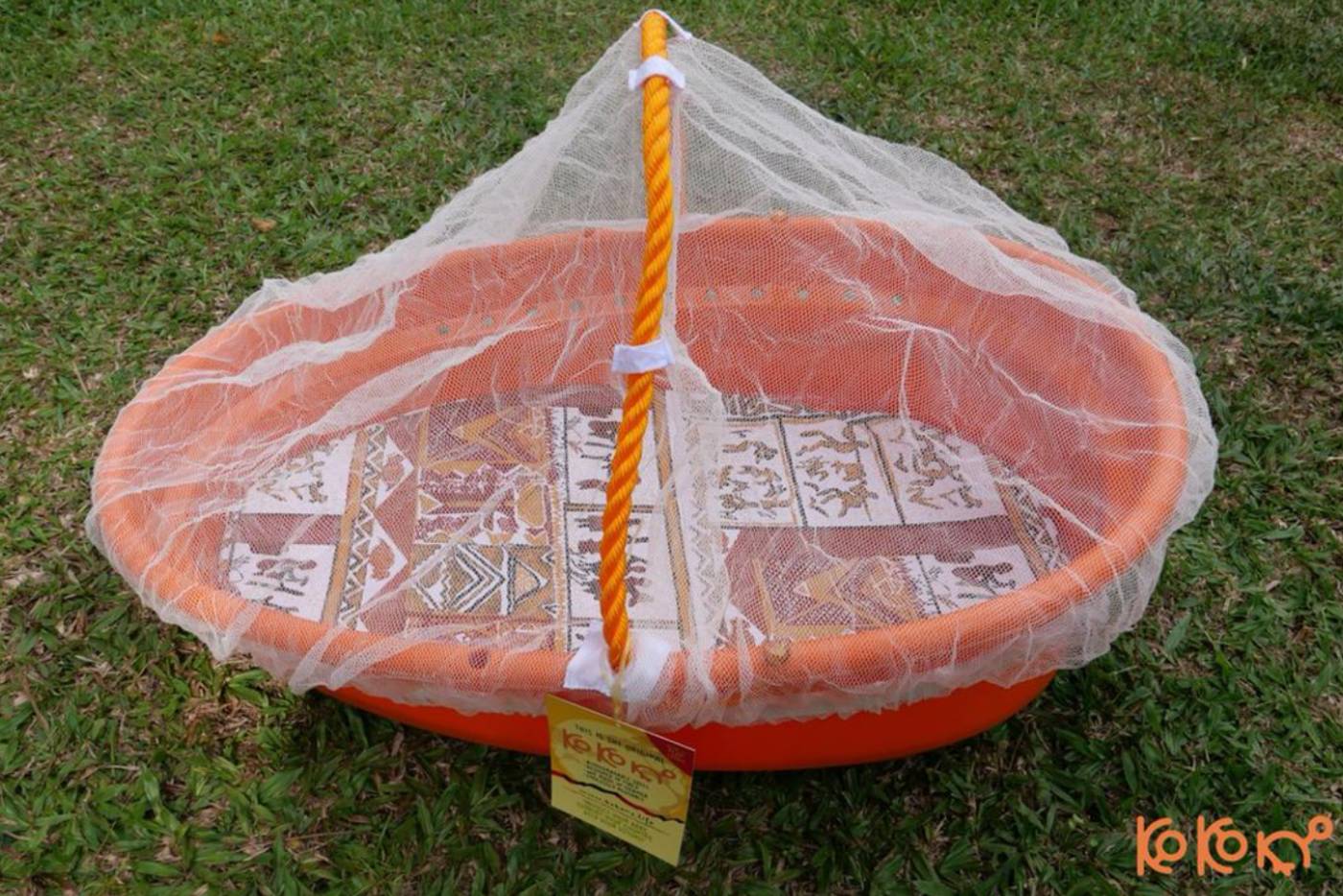
KOKONO™ is a cradle designed to mitigate health and safety risks related to poverty and hardship, providing protective shelter for newborns.
KOKONO™ is a Made in Italy patent with social impact. The innovation behind KOKONO™ lies in the fact that it was conceived specifically to meet the needs of low-income communities. This comes through in its design, created by our collaborator – designer Enrico Bassi – following a research field study organized by Lucia Dal Negro and John Walugembe (Federation of Small and Medium Enterprises Uganda), during which information and preferences were gathered directly from potential end users of the cradle (mothers, doctors, nurses, VHTs).
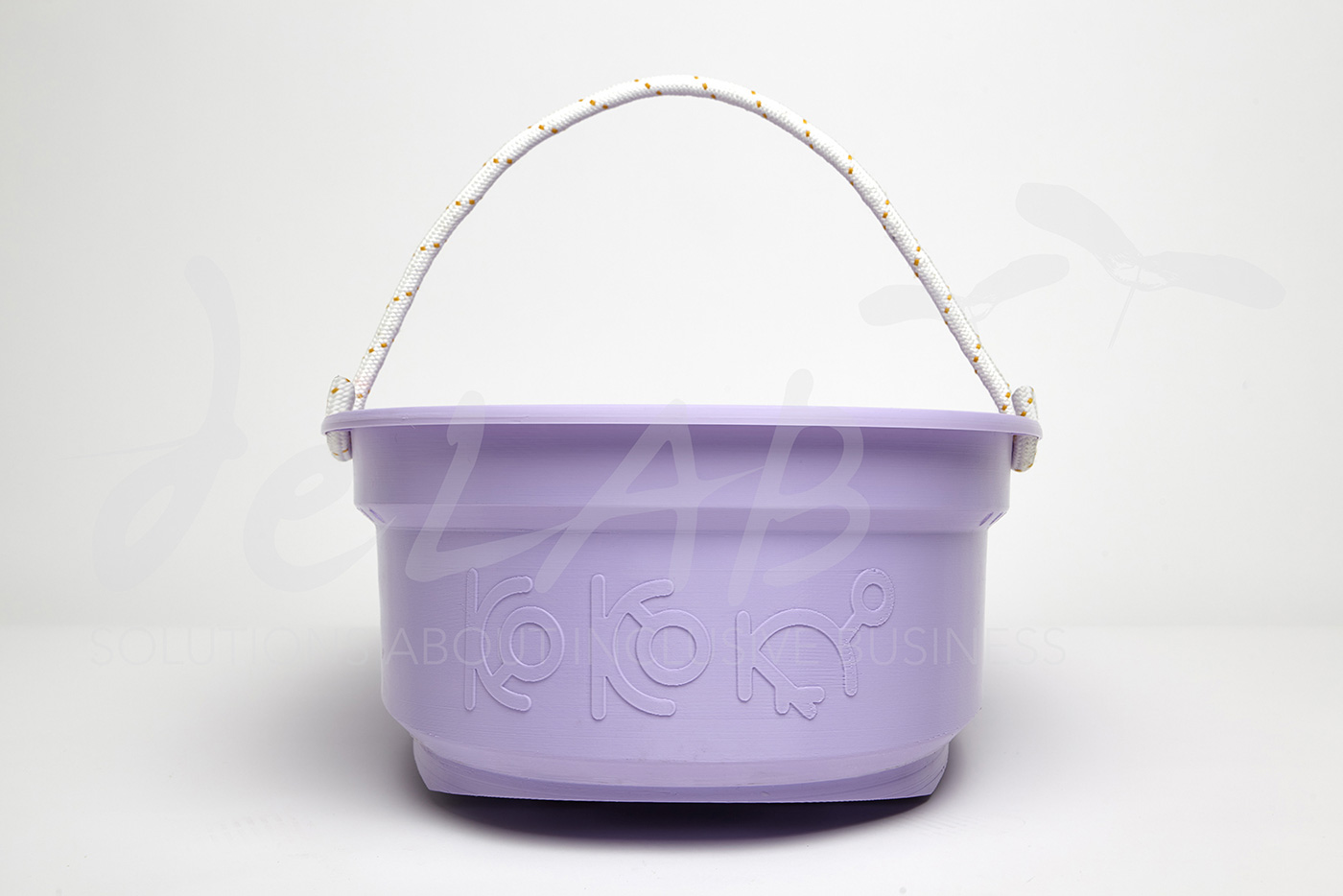
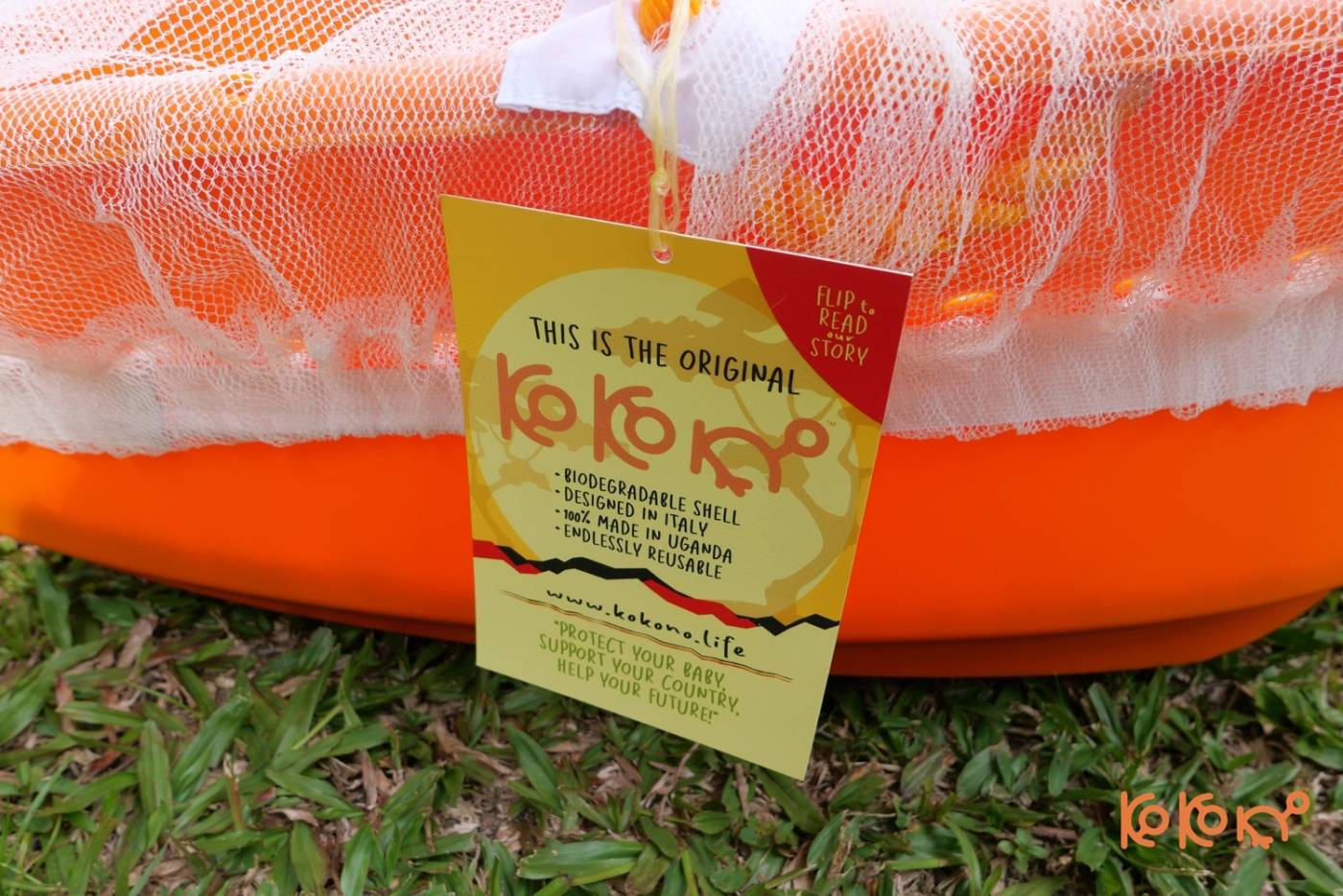
Designed to be versatile, sturdy, and functional, Kokono’s features are original starting from the choice of materials, of which 80% of the product (the entire orange, pink, or blue shell) is made from plastics with the highest biodegradability compared to conventional plastics*; from its inclusive business model, which enables entry into the Ugandan market at an affordable price point for a target group with limited spending capacity; and from the partnerships that strengthen it—public, private, and nonprofit—representing a growth opportunity for all, truly all, local stakeholders.
*The material used for the cradle’s shell lasts as long as conventional plastics but, if abandoned in an aerobic environment, it is broken down by bacteria and transformed into humus, methane, water, and CO₂ in a shorter time than conventional plastics.
From a consumer perspective, KOKONO™’s main feature is its versatility: it can also be used as a baby bath cradle and as a play area.
KOKONO™ was conceived and designed in line with the United Nations 2030 Agenda Sustainable Development Goals:
DISCLAIMER
Some Kokono mosquito nets are treated. We recommend leaving them outdoors for 3–4 hours and washing them twice with soap and water to avoid potential—though very rare—skin intolerances.
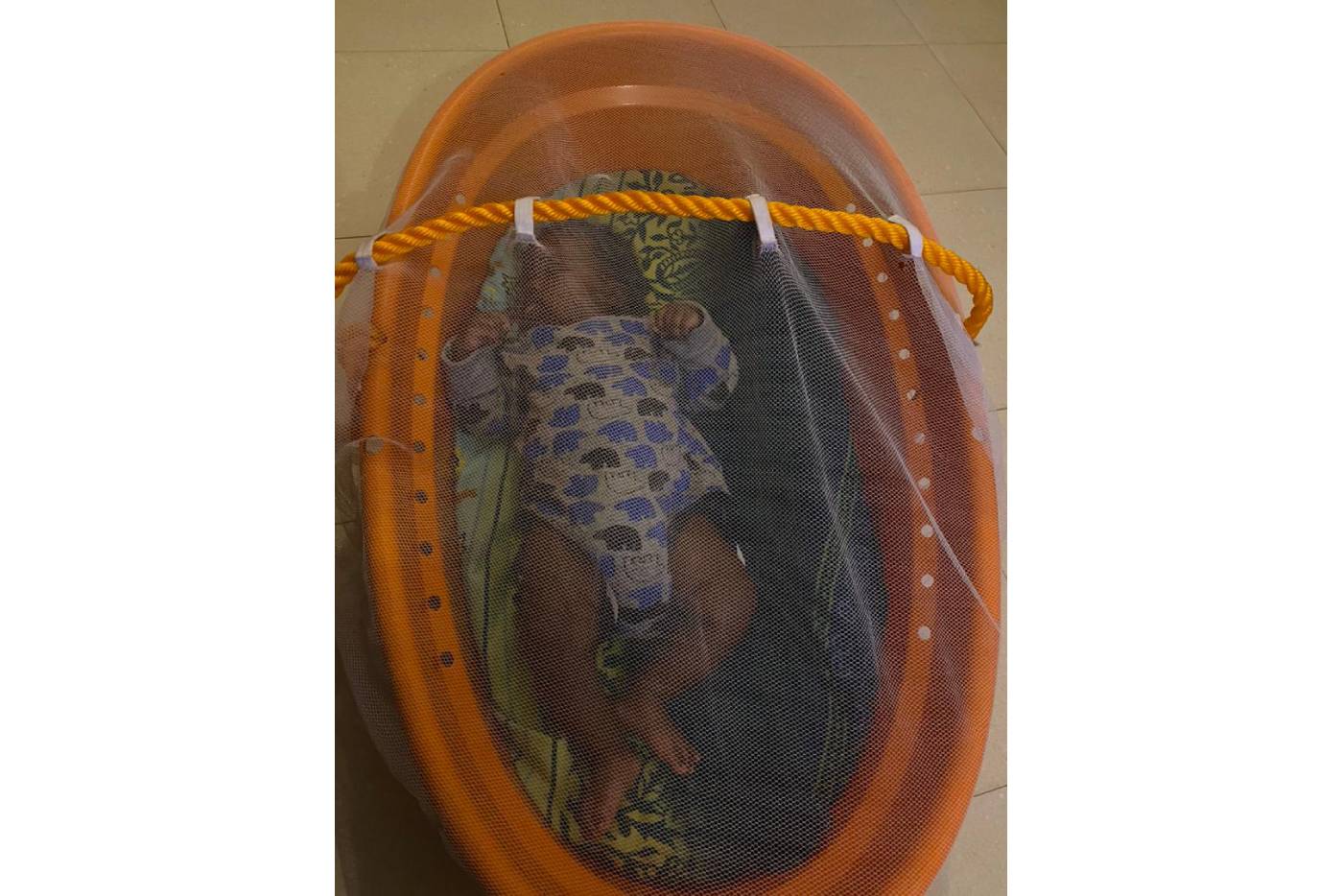
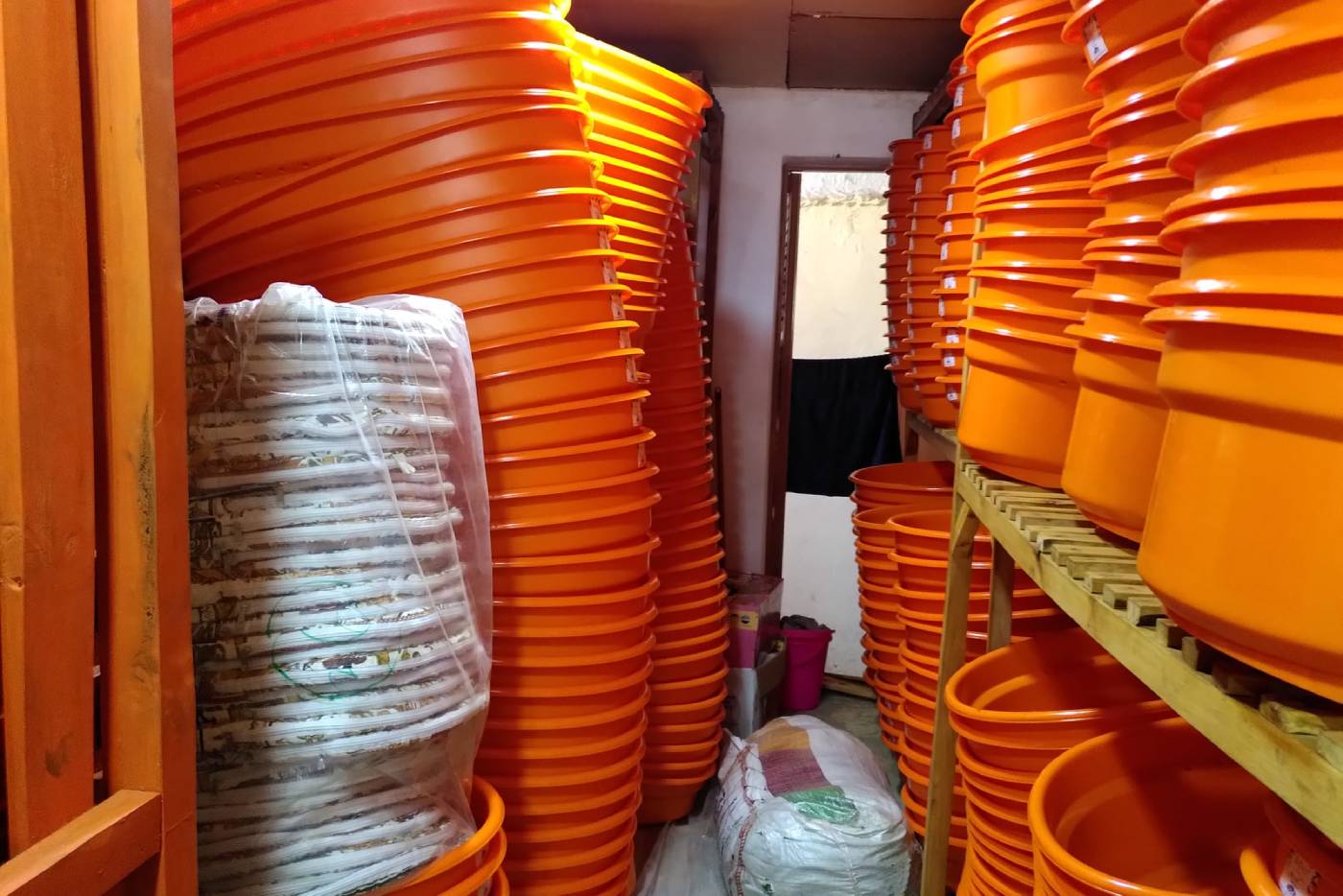
And now, some clarity on the environmental and management aspects of the Kokono product and project:
1) How do you manage the product packaging?
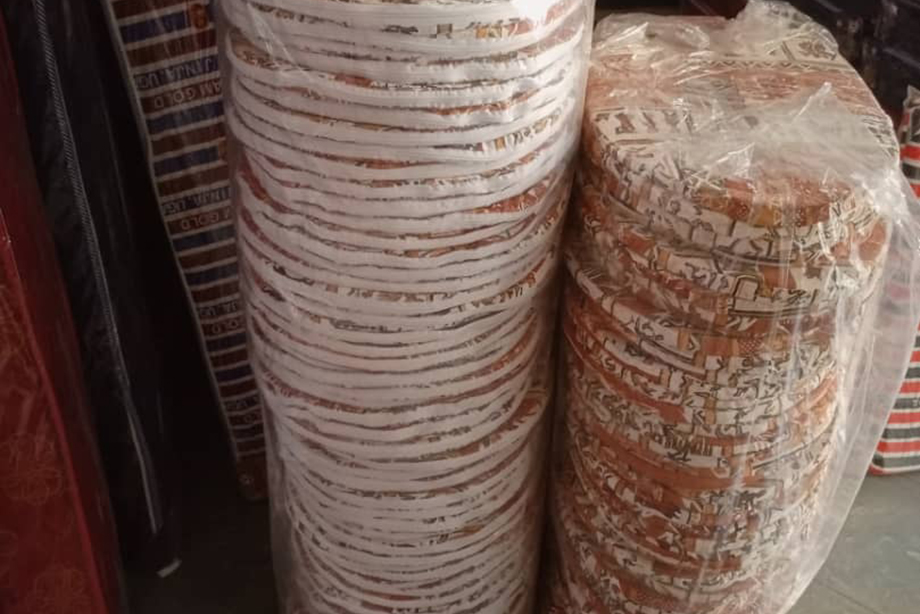
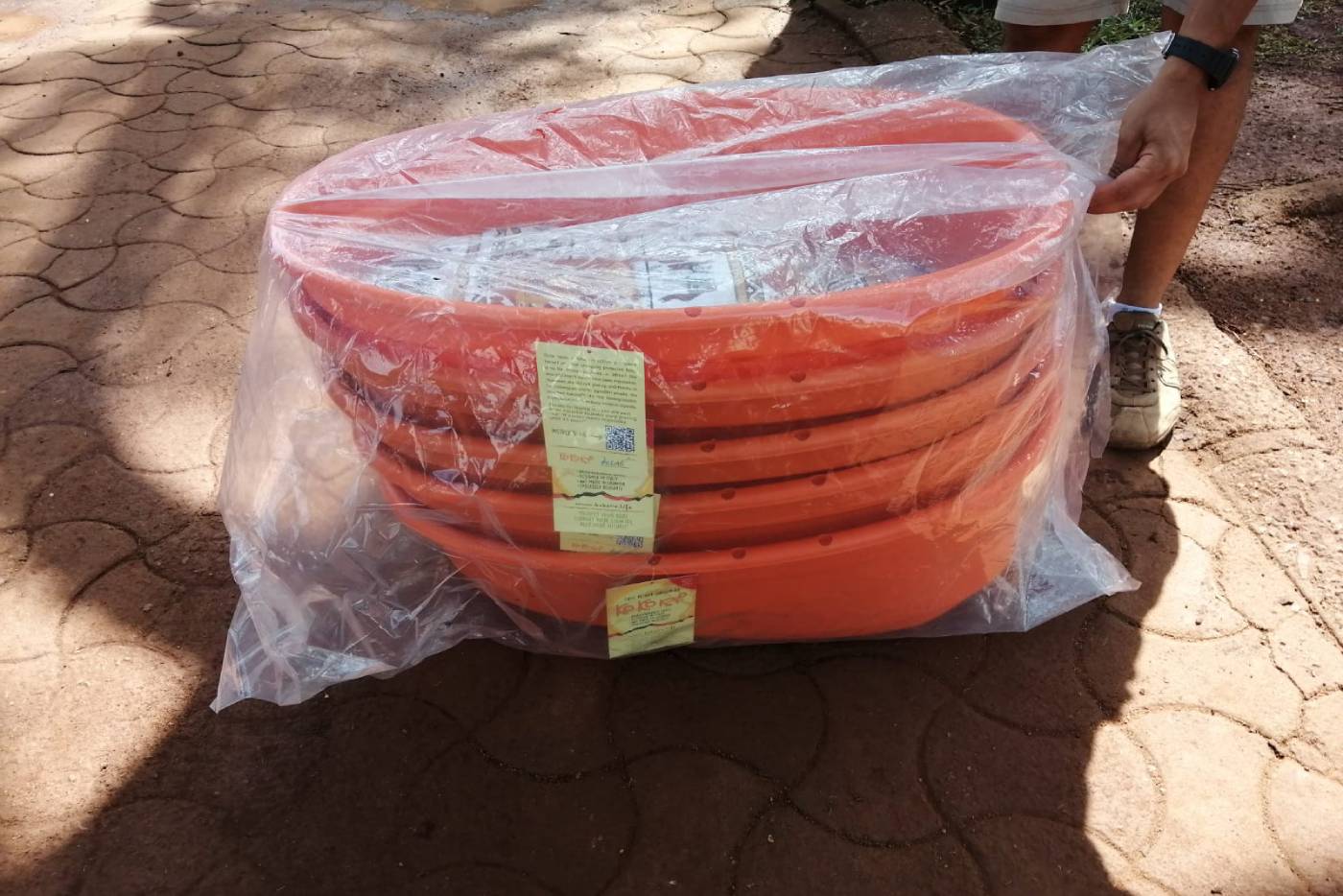
Kokono has no packaging; it is sold without plastic or other types of wrapping. The product was designed to be stackable in order to save space and avoid boxes or coverings. All the components of the cradle are placed inside the cotton mattress cover. In our warehouse, the mattresses are covered with a plastic sheet provided by our supplier, which serves to protect the product from dust.
2) How do we manage logistics?
Our cradles are shipped via boda-boda (up to 10/15 pieces). For larger quantities, it is the customer who collects the material. We recommend using public transport, but in Kampala this is not an easy option, which is why customers often arrange collection with a large truck that can carry everything at once, thus avoiding multiple trips.
3) When you say Kokono is “Made in Uganda,” what do you mean?
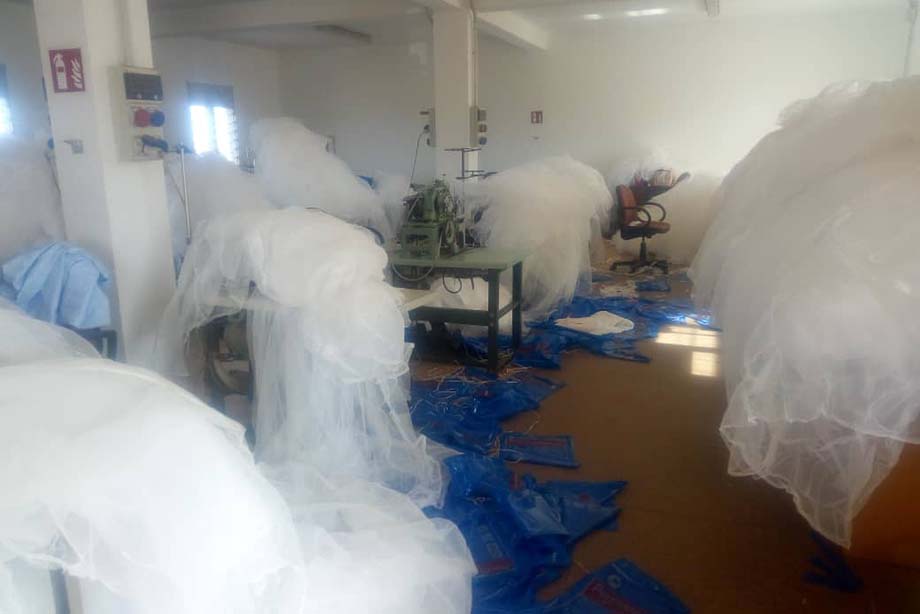
Kokono is entirely produced and assembled in Uganda. The shell is locally manufactured, as well as the mattresses, mosquito nets, and handles. The instructions and stickers are printed locally and included in the sales kit by our team in Kampala.
4) Do you involve local staff in the cradle’s production process?
Of course. Since our suppliers are Ugandan, all the workers involved in the production of Kokono are local. Specifically, the supplier responsible for producing the mosquito nets and handles (custom-made for our cradle) employs women in vulnerable situations. From this perspective, Kokono is also a project that supports the social inclusion of disadvantaged women, who are engaged in producing the mosquito nets and handles.
If you have further questions, write to us at: info@delab.it.
© 2026 De-LAB S.r.l. Società Benefit - P.I. 10351340962 | info@delab.it | privacy policy | credits